Newsletter Subscribe
Enter your email address below and subscribe to our newsletter
All voices matter
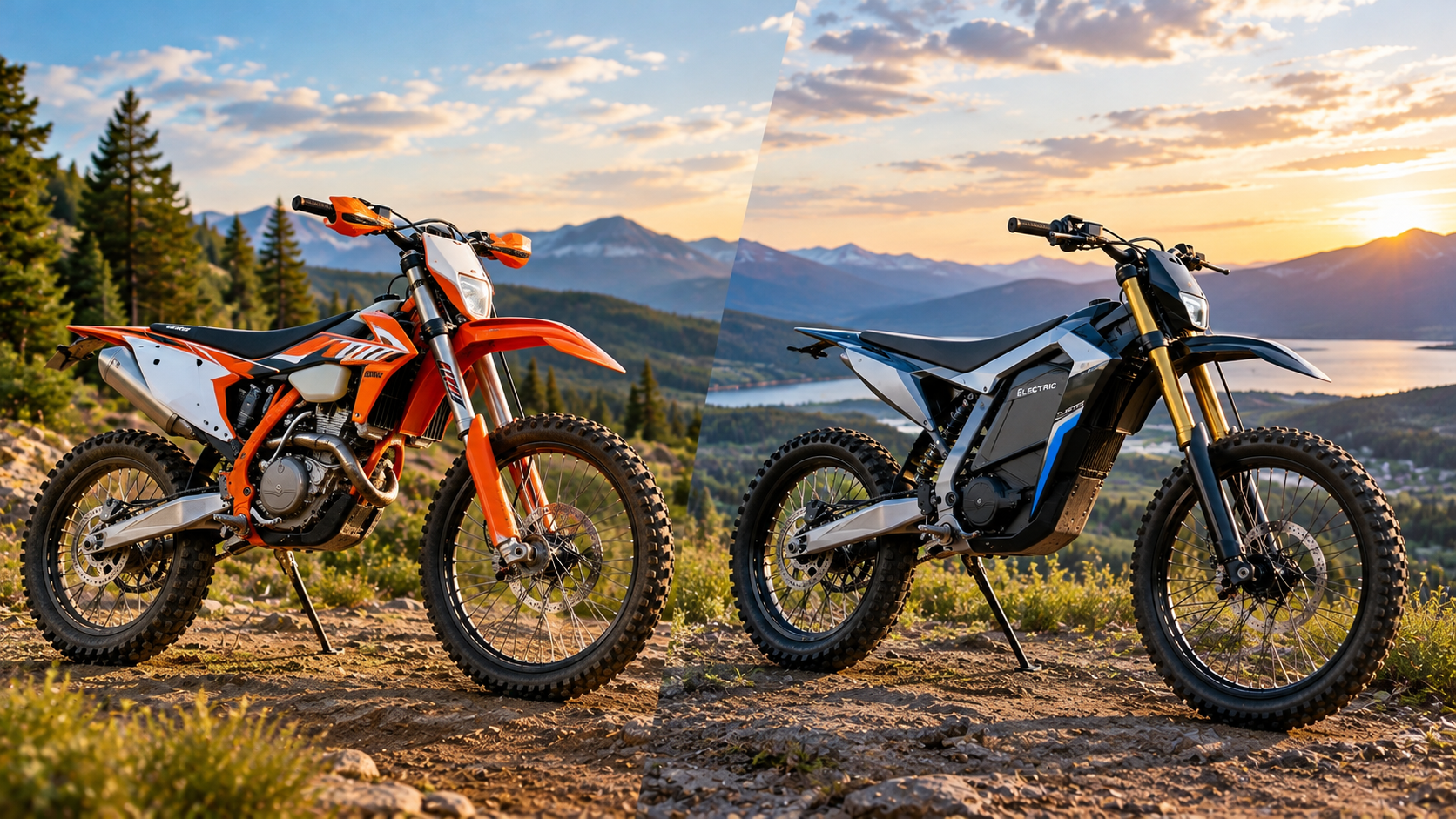
Electric dirt bikes and gas dirt bikes offer two different approaches to off-road riding. Traditional gasoline-powered motorcycles have long been the standard for motocross, trail riding, and enduro competitions. However, electric dirt bikes are becoming increasingly popular thanks to their instant torque, quieter operation, and simpler powertrains.
In 2026, riders have more options than ever before. Electric models range from lightweight recreational bikes to high-performance electric enduro motorcycles, while gas-powered dirt bikes continue to offer familiar engine characteristics, quick refueling, and extensive dealer support.
So, which type of dirt bike is better?
The answer depends on your riding style, experience, budget, and expectations. In this guide, we compare electric dirt bikes vs gas dirt bikes across the most important categories to help you decide which option makes the most sense for your next off-road adventure.
Before exploring the details, here is an overview of the main differences between electric and gasoline-powered dirt bikes.
| Feature | Electric Dirt Bikes | Gas Dirt Bikes |
|---|---|---|
| Power source | Rechargeable battery and electric motor | Gasoline engine |
| Power delivery | Immediate motor response | Depends on engine characteristics and RPM |
| Gear shifting | Many models use a single-speed drivetrain | Typically use a multi-speed gearbox |
| Refueling or charging | Requires access to charging | Usually refuels in minutes |
| Routine powertrain maintenance | Generally lower | Generally higher |
| Operating noise | Typically much quieter | Louder engine and exhaust |
| Riding range | Depends on battery capacity and terrain | Depends on fuel capacity and consumption |
| Long-distance riding | Requires charging planning | Often easier with access to fuel |
| Mechanical complexity | Fewer conventional engine components | More engine and fuel-system components |
| Competition support | Varies by discipline and event rules | Widely established in traditional dirt bike racing |
| Best use cases | Recreational trails, suitable private land, selected competition formats | Motocross, enduro, trail riding, and established racing categories |
Neither type is automatically superior in every situation. A lightweight electric bike may be ideal for quiet recreational riding, while a gasoline-powered enduro motorcycle may be more practical for remote trails where charging is unavailable.
One of the biggest differences between electric dirt bikes and gas dirt bikes is how they deliver power.
Electric motors can produce strong torque at very low speeds. This can help riders accelerate out of corners, climb technical sections, and navigate obstacles without constantly changing gears.
Many electric dirt bikes also eliminate the need for a conventional clutch and multi-speed gearbox. This simplifies operation, particularly for beginners who are still learning throttle control and balance.
Some models offer selectable riding modes that limit power or soften throttle response. These settings can make it easier to adapt the motorcycle to slippery terrain, unfamiliar trails, or different skill levels.
However, instant torque does not mean every electric dirt bike is more powerful than every gas model. Performance varies considerably with motor output, battery voltage, controller settings, motorcycle weight, and overall design.
Gas-powered dirt bikes deliver power through an internal combustion engine. Depending on the engine design, riders may experience a strong low-end response, a broad midrange, or a power delivery that builds as engine RPM increases.
A multi-speed gearbox and clutch provide additional control over engine speed and wheel torque. Experienced riders often appreciate this level of mechanical involvement, especially in motocross and technical enduro riding.
Gas dirt bikes are also available in a wide range of engine sizes, from small beginner motorcycles to high-performance competition machines.
Which is better?
Electric dirt bikes can offer excellent low-speed control and immediate acceleration. Gas dirt bikes provide familiar gear-based control and a wide variety of engine characteristics. The better choice depends on your preferred riding experience and the specific models being compared.
Range is one of the most important considerations when comparing electric and gas dirt bikes.
Electric dirt bike range depends on battery capacity, rider weight, speed, terrain, elevation changes, temperature, and throttle use.
Riding slowly on relatively smooth trails may consume much less energy than climbing steep hills or accelerating aggressively through sand and mud.
For this reason, advertised maximum range should be treated as a reference rather than a guarantee.
Battery capacity, measured in kilowatt-hours (kWh), can help buyers compare energy storage between models. However, battery capacity alone does not determine actual riding distance. Motor efficiency, controller tuning, and motorcycle weight also matter.
Before purchasing an electric dirt bike, consider how long your typical riding sessions last and whether you can recharge the battery between rides.
Gas dirt bikes store energy in liquid fuel, allowing riders to refuel quickly when gasoline is available.
Actual range depends on fuel tank capacity, engine size, riding conditions, and throttle use. Aggressive motocross riding can consume fuel much faster than moderate trail riding.
The main advantage is convenience: carrying an approved fuel supply or accessing a nearby fuel station can make longer trips easier to plan than trips that depend on charging access.
For long rides in remote areas, gas dirt bikes generally have an advantage because ref