Newsletter Subscribe
Enter your email address below and subscribe to our newsletter
All voices matter
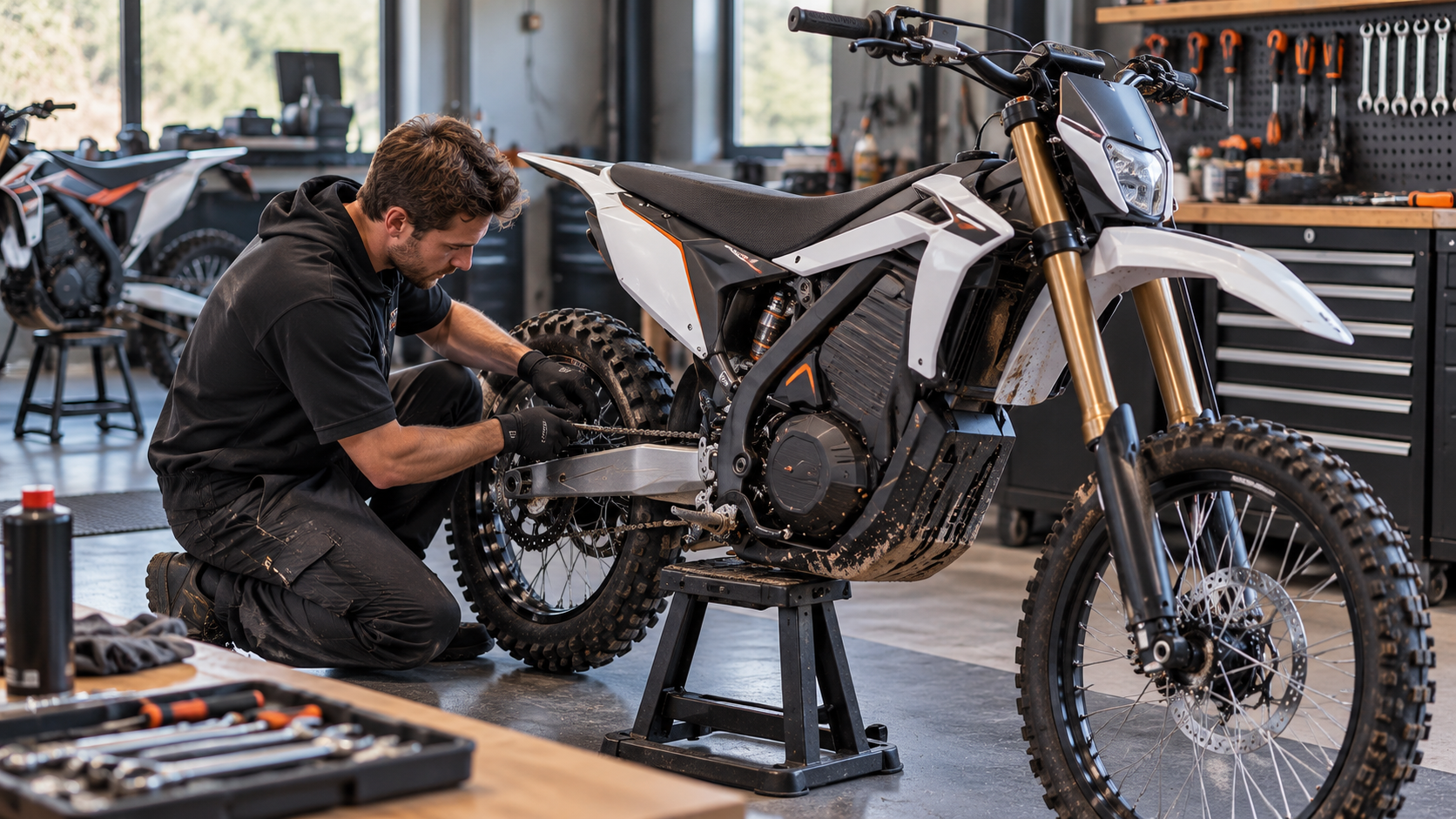
Electric dirt bikes generally require less powertrain maintenance than traditional gas-powered motorcycles, but that doesn’t mean they’re maintenance-free. Dirt, water, vibration, and regular off-road riding can all affect important components over time.
Proper electric dirt bike maintenance helps improve reliability, protect expensive components, and keep your motorcycle safe to ride.
Whether you own a lightweight trail bike or a high-performance electric motocross model, understanding a few basic maintenance routines can make a significant difference.
This guide covers the essential checks, cleaning methods, battery care practices, and maintenance intervals every electric dirt bike owner should know.
A quick pre-ride inspection can help you identify problems before they become serious.
Start by checking the tires for damage, embedded objects, and excessive wear. Verify that tire pressure matches the manufacturer’s recommendations for your bike and riding conditions.
Next, test the front and rear brakes. Both should respond smoothly without unusual noises or excessive lever travel.
Inspect the handlebars, footpegs, suspension, and visible fasteners for damage or looseness.
Finally, check the battery charge and make sure the battery is securely mounted.
A basic pre-ride inspection should include:
If you notice a problem that could affect safety, repair it before riding.
Off-road motorcycles regularly collect mud, sand, and dust. Allowing debris to build up can accelerate wear and make inspections more difficult.
However, cleaning an electric dirt bike requires additional care around electrical components.
Begin by switching off the motorcycle and allowing hot components to cool.
Use a soft brush to remove loose dirt, then clean the frame, wheels, and plastics with a damp cloth or a gentle stream of water where permitted by the manufacturer.
Avoid directing high-pressure water toward battery compartments, charging ports, electrical connectors, bearings, and seals.
After cleaning, dry the motorcycle thoroughly, especially around electrical connections and moving components.
Do not connect the charger until the charging port and surrounding areas are completely dry.
The battery is one of the most expensive components of an electric dirt bike, so proper care is essential.
Most modern electric dirt bikes use lithium-ion battery technology, although battery specifications and management systems vary by model.
Follow the manufacturer’s charging instructions and use an approved charger.
Avoid leaving the battery in extremely hot environments, such as inside a vehicle exposed to direct summer sunlight.
For extended storage, many manufacturers recommend keeping the battery at a partial charge rather than fully charged or completely empty. The correct storage level and inspection schedule depend on the battery design.
Check the battery housing regularly for cracks, swelling, moisture intrusion, or other visible damage.
Never attempt to open or repair a damaged high-voltage battery pack yourself.
Related Reading: How Long Do Electric Dirt Bike Batteries Last? A Complete Guide for Riders
Internal link placement: Link the article title above to your existing DirtEvo battery lifespan guide.
Many electric dirt bikes use a chain-driven drivetrain, although some models use belts or other drive systems.
For chain-driven motorcycles, regular inspection is important because incorrect chain tension can accelerate sprocket wear and affect performance.
Check chain slack according to the motorcycle’s service manual.
Inspect the chain for corrosion, stiff links, damaged rollers, and excessive wear.
Clean it with a product suitable for the chain type, then apply the lubricant recommended by the manufacturer.
Also inspect the front and rear sprockets for hooked, broken, or unevenly worn teeth.
Never adjust chain tension while the motorcycle is powered on.
Brakes and tires are essential for maintaining control on loose and uneven surfaces.
Inspect brake pads for wear and check brake discs for visible damage.
If your motorcycle uses hydraulic brakes, look for fluid leaks and changes in lever feel.
Brake fluid replacement intervals vary by manufacturer, so follow the official maintenance schedule.
Tires should be inspected after demanding rides, particularly when riding over sharp rocks or rough terrain.
Look for cuts, sidewall damage, missing tread blocks, and punctures.
Replace damaged or excessively worn tires before your next ride.
Suspension components absorb impacts from bumps, jumps, and uneven terrain.
Inspect the front fork tubes for oil leaks, scratches, or damage.
Check the rear shock for visible leaks and unusual movement.
Clean dirt from exposed suspension components using methods recommended by the manufacturer.
Steering-head, wheel, and suspension linkage bearings should also be inspected for looseness or rough movement.
If you notice knocking sounds, excessive play, or inconsistent suspension performance, have the motorcycle inspected by a qualified technician.
Maintenance intervals depend on the bike, riding conditions, and manufacturer’s recommendations.
The following table provides a general inspection schedule rather than a replacement for your owner’s manual.
| Maintenance Task | Suggested Frequency |
|---|---|
| Check tires and brakes | Before every ride |
| Inspect battery and electrical connections visually | Before every ride |
| Remove dirt and mud | After muddy or dusty rides |
| Inspect and lubricate chain, if fitted | After demanding rides or as specified |
| Inspect brake pads and discs | Every few rides |
| Check fasteners and suspension | Regularly and after hard impacts |
| Inspect bearings and drivetrain wear | Periodically according to the service manual |
| Check battery storage charge | During extended storage, per manufacturer guidance |
Riders who frequently encounter deep mud, sand, water, or aggressive motocross conditions may need more frequent inspections.
Proper storage helps protect the battery, tires, and electrical components.
Choose a dry, secure location away from excessive heat and moisture.
Clean and dry the motorcycle before storage, and follow the manufacturer’s battery storage recommendations.
If the bike will remain unused for several weeks or months, check whether the manufacturer recommends disconnecting or removing the battery.
Do not leave a damaged battery connected to charging equipment.
Also consider supporting the motorcycle appropriately during long-term storage to reduce unnecessary tire loading.
Some maintenance mistakes can shorten component life or create safety risks.
Common examples include:
Electric dirt bikes have fewer conventional engine maintenance requirements, but their electrical systems still require careful handling.
Related Reading: Electric Dirt Bikes vs Gas Dirt Bikes: Key Differences in 2026
Internal link placement: Link this title to your existing DirtEvo electric-versus-gas comparison article.
Not every maintenance task should be performed at home.
High-voltage battery faults, damaged electrical wiring, controller problems, hydraulic brake repairs, and major suspension issues may require professional attention.
If the motorcycle displays persistent fault codes, loses power unexpectedly, or develops unusual mechanical noises, stop riding until the issue has been diagnosed.
Use qualified technicians familiar with your motorcycle’s electrical and mechanical systems.
For riders still developing their off-road skills, understanding basic motorcycle controls and safe riding techniques is equally important.
Related Reading: How to Ride an Electric Dirt Bike for Beginners
Internal link placement: Link this title to your DirtEvo beginner riding guide.
Electric dirt bike maintenance doesn’t have to be complicated.
Regular inspections, careful cleaning, proper battery care, and timely replacement of worn components can help keep your motorcycle dependable.
The most effective approach is to develop a simple routine: inspect your bike before riding, clean it after demanding sessions, and follow the manufacturer’s service schedule.
By paying attention to these essentials, you can spend less time dealing with avoidable problems and more time enjoying electric off-road riding.