Newsletter Subscribe
Enter your email address below and subscribe to our newsletter
All voices matter
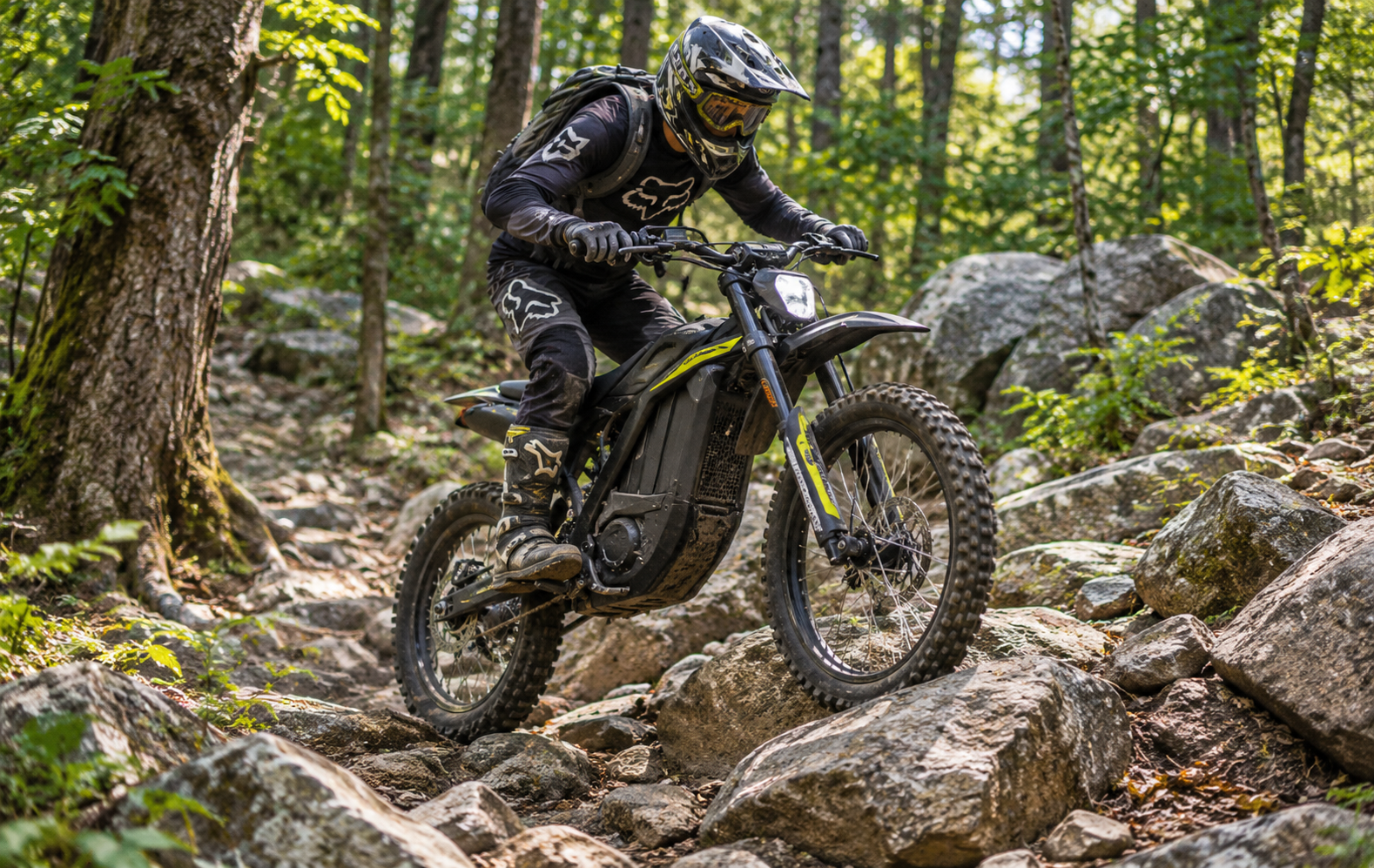
Rocky trails are among the most challenging environments for electric dirt bike riders. Loose stones, exposed roots, uneven surfaces, and unexpected obstacles can quickly test your balance, throttle control, and ability to choose a safe riding line.
Electric dirt bikes bring unique characteristics to technical terrain. Their instant torque can help with controlled climbs, while their often simplified transmissions allow riders to focus on balance and traction. However, sudden throttle inputs can also cause wheelspin on slippery rocks.
Learning how to ride an electric dirt bike on rocky trails requires patience, proper technique, and a realistic understanding of your motorcycle’s capabilities.
This guide explains how to prepare your bike, maintain balance, choose riding lines, and navigate rocky terrain with greater confidence.
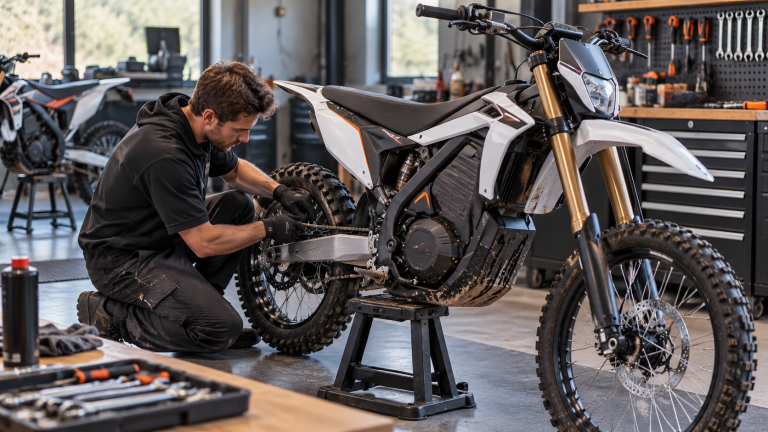
Before entering a rocky trail, inspect your motorcycle carefully.
Rocky surfaces place additional stress on tires, wheels, suspension components, and protective equipment.
Start by checking tire pressure according to your manufacturer’s recommendations. Tire pressure influences traction, handling, and the risk of damaging the wheel rim.
Inspect the tires for cuts, worn tread, or embedded objects. Check brake performance, chain condition, and suspension components.
If your motorcycle offers adjustable riding modes, consider beginning with a smoother, less aggressive power setting.
A predictable throttle response can be particularly helpful when navigating rocks at low speed.
Also confirm that your battery has sufficient charge for the planned route, including a reasonable reserve for unexpected delays or difficult sections.
Body positioning is one of the most important skills for riding over rocks.
On uneven terrain, standing on the footpegs often allows your legs to absorb impacts while the motorcycle moves beneath you.
Keep your knees slightly bent, elbows relaxed, and eyes focused ahead.
Avoid locking your arms or gripping the handlebars excessively. A rigid riding position makes it harder to respond when the wheels encounter rocks.
Maintain a balanced stance over the footpegs and adjust your position gradually as the terrain changes.
When climbing, you may need to move your body slightly forward to maintain front-wheel control while preserving rear-wheel traction.
On descents, shift your position as needed without leaning excessively backward or compromising your ability to steer and brake.
Practice tip: Begin on a short, low-speed section with small, stable rocks before attempting more difficult terrain. A qualified off-road instructor can help you develop the correct technique.
Electric dirt bikes can deliver substantial torque almost immediately.
This can be beneficial when climbing technical terrain, but aggressive throttle application may cause the rear wheel to spin on loose stones.
The key is to maintain controlled momentum rather than relying on sudden bursts of power.
Apply throttle gradually and avoid unnecessary acceleration over slippery surfaces.
When approaching a rocky section, choose a manageable speed and maintain consistent control.
If your motorcycle has selectable power modes, a lower-response setting may make technical riding easier.
Avoid abruptly closing or opening the throttle while crossing an obstacle, especially when the motorcycle is already unstable.
For more fundamental exercises, read our guide to [How to Improve Your Electric Dirt Bike Riding Skills].
Internal Link 1: Link to the existing DirtEvo riding skills article.
Choosing a good riding line is often more important than riding speed.
Before entering a difficult section, look ahead and identify possible routes through the obstacles.
Whenever possible, choose a line with stable surfaces, manageable gaps, and sufficient traction.
Avoid sharp-edged rocks, loose piles of stones, and unexpected drop-offs when a safer alternative exists.
Remember that the easiest-looking route may not always provide the best traction.
For example, a flat wet rock can be more slippery than a rougher dry surface nearby.
When approaching unfamiliar obstacles, slow down or stop in a safe location to inspect the route.
Never enter a steep or technical section simply because another rider has successfully crossed it.
Your motorcycle, riding ability, and conditions may be different.
Braking on rocky surfaces requires careful judgment.
Loose stones can reduce tire grip, while uneven rocks may cause the wheels to bounce or temporarily lose contact with the ground.
Whenever possible, reduce speed before entering a difficult obstacle rather than braking suddenly in the middle of it.
Apply both brakes progressively, taking available traction into account.
Avoid grabbing the front brake abruptly when the wheel is deflected or the motorcycle is leaning.
On downhill sections, maintain a controlled speed and choose your braking points carefully.
Some electric dirt bikes offer regenerative braking or adjustable motor braking. These features can influence how the motorcycle slows down when you release the throttle.
Understand the system’s behavior on predictable terrain before relying on it during a technical descent.
Not all rocky trails require the same techniques.
Some routes contain small loose stones, while others feature large fixed rocks, uneven ledges, and slippery exposed surfaces.
The following table summarizes common challenges.
| Rocky Terrain | Main Challenge | Recommended Approach |
|---|---|---|
| Loose gravel and stones | Reduced traction | Smooth throttle and progressive braking |
| Large embedded rocks | Wheel deflection and impacts | Balanced standing position and careful line choice |
| Wet rocks | Slippery surfaces | Reduced speed and gentle control inputs |
| Rocky uphill trails | Maintaining traction | Controlled momentum and suitable body position |
| Rocky downhill trails | Managing speed and stability | Early speed reduction and progressive braking |
| Rock steps and ledges | Sudden elevation changes | Professional instruction and appropriate motorcycle capability |
For new riders, it is better to develop confidence on simple rocky routes before progressing to large obstacles or steep technical sections.
Your motorcycle’s design can make a significant difference on rocky trails.
Important features include suspension performance, ground clearance, tire selection, chassis balance, and battery capacity.
Lightweight motorcycles can be easier to maneuver through tight obstacles, while larger off-road motorcycles may offer greater suspension travel and improved stability in certain conditions.
However, a heavier motorcycle can become more difficult to manage if you lose balance or need to recover it after a fall.
There is no single electric dirt bike that performs best on every rocky trail.
Your choice should reflect the terrain, rider experience, and intended use.
Explore our [Best Electric Dirt Bikes for Trail Riding in 2026] guide for a comparison of motorcycles suited to different off-road environments.
Internal Link 2: Link to the existing DirtEvo trail riding bike comparison.
Rocky terrain can increase energy consumption, particularly when routes involve steep climbs and repeated low-speed acceleration.
Battery performance also depends on rider weight, temperature, motor efficiency, and riding conditions.
Avoid planning routes based only on the manufacturer’s maximum advertised range.
Technical trails may take longer to complete than expected, and difficult sections can increase energy usage.
Before departure, check your battery level and estimate the energy required for the complete route.
Leave additional capacity for unexpected obstacles, detours, or delays.
If you’re unsure how riding conditions affect battery life, see [How Long Do Electric Dirt Bike Batteries Last? A Complete Guide for Riders].
Internal Link 3: Link to the existing DirtEvo battery lifespan guide.
Rocky trail riding is a skill that develops over time.
Begin with simple terrain and gradually increase difficulty as your balance and control improve.
Wear a suitable full-face motorcycle helmet, protective boots, gloves, knee protection, and appropriate off-road riding gear.
Avoid riding unfamiliar technical trails alone. Riding with an experienced partner can provide additional assistance when conditions become difficult.
Always confirm that motorized electric motorcycles are permitted on the trail.
If a rocky obstacle exceeds your ability or your motorcycle’s capabilities, stop and choose a safer route.
Good riding judgment includes knowing when not to attempt an obstacle.
Some electric dirt bikes are well suited to rocky terrain, particularly models with capable suspension, appropriate tires, sufficient ground clearance, and manageable power delivery.
Standing on the footpegs is often helpful because it allows your legs to absorb impacts and gives the motorcycle more freedom to move beneath you. However, proper technique depends on the obstacle and riding conditions.
There is no universal tire pressure suitable for every electric dirt bike. Follow the tire and motorcycle manufacturer’s recommendations, considering rider weight, terrain, and whether the wheels use tubes, mousse inserts, or other systems.
A lighter motorcycle may be easier to maneuver, but suspension capability, wheel size, ground clearance, and rider ergonomics are also important.
Learning to ride an electric dirt bike on rocky trails requires a combination of preparation, balance, throttle control, braking skills, and careful route selection.
Focus on smooth movements and controlled momentum rather than speed.
Choose terrain that matches your experience and gradually build confidence through consistent practice.
With suitable equipment, professional instruction when needed, and thoughtful riding decisions, you can develop the skills required to navigate rocky off-road environments more safely and confidently.