Newsletter Subscribe
Enter your email address below and subscribe to our newsletter

All voices matter
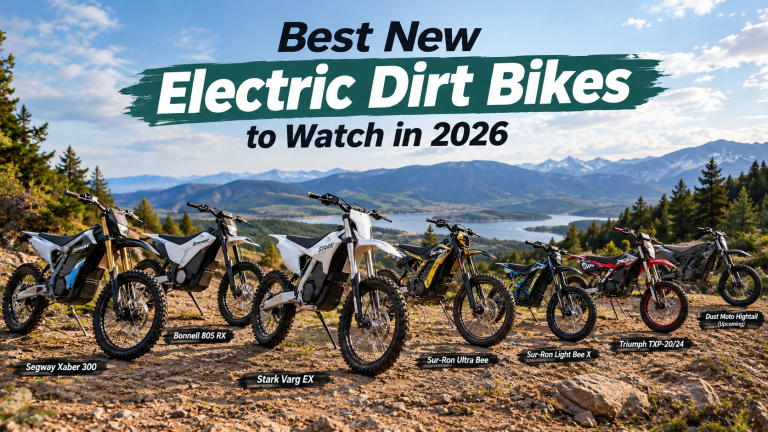
Electric dirt bikes are becoming an increasingly important part of the off-road motorcycle industry. As battery technology improves, electric motors become more efficient, and manufacturers explore new designs, riders have more options than ever before. From beginners looking for an accessible introduction to off-road riding to experienced enthusiasts seeking high-performance machines, electric dirt bikes are attracting attention across a wider range of riders.
In 2026, the industry is moving beyond simply replacing gasoline engines with electric motors. Manufacturers are focusing on improving riding range, reducing charging time, refining suspension systems, and developing smarter technologies that make electric off-road motorcycles more practical.
So, what does the future hold for electric dirt bikes? Here are the key trends worth watching in 2026 and what they could mean for riders.
Battery performance remains one of the most important factors influencing the development of electric dirt bikes. Riders want enough power for challenging trails, longer practice sessions, and weekend adventures without constantly worrying about recharging.
In 2026, battery development continues to focus on improving energy density, reducing unnecessary weight, and maintaining consistent performance under demanding riding conditions.
Lithium-ion batteries remain central to the electric motorcycle market. Improvements in battery management systems can also help manufacturers monitor temperature, regulate power delivery, and protect battery cells during charging and riding.
However, real-world range still depends on several factors, including battery capacity, rider weight, terrain, riding speed, ambient temperature, and throttle use. Riding aggressively through mud, sand, or steep hills generally consumes more energy than riding at a moderate pace on smoother trails.
For buyers, the most useful comparison is not simply the advertised maximum range. It is how a bike performs under conditions similar to those in which it will actually be ridden.
Charging convenience is another major trend shaping the future of electric dirt bikes. Although electric motorcycles eliminate the need for gasoline, riders still need a practical way to recharge between sessions.
Manufacturers are exploring improvements in charging equipment, battery management, and battery accessibility. Some electric dirt bikes feature removable batteries, allowing owners to charge them separately from the motorcycle. Other models use integrated battery systems designed around the bike’s frame and performance requirements.
Each approach offers different advantages.
Removable batteries can be particularly convenient for riders who live in apartments, store their bikes in shared garages, or want to carry a spare battery. Integrated systems may provide advantages in packaging, structural design, and weight distribution.
Charging time depends on battery capacity, charger output, battery temperature, and the manufacturer’s charging recommendations. Buyers should check the time required for a typical recharge rather than relying exclusively on claims about fast charging.
As charging technology develops, electric dirt bikes may become easier to use for riders who want to spend more time on the trail and less time managing their equipment.
Electric motors have a distinctive advantage in off-road riding: they can deliver strong torque from very low speeds. This can make it easier to accelerate out of corners, climb technical sections, and navigate obstacles without constantly shifting gears.
In 2026, manufacturers are continuing to refine motor output, throttle response, and power delivery. The goal is not necessarily to make every electric dirt bike faster. Instead, it is to create a better balance between usable power, control, and efficiency.
For experienced riders, higher-output models may offer the acceleration and climbing ability needed for demanding terrain. Beginners, on the other hand, may benefit more from smooth throttle response and predictable power delivery.
Selectable riding modes are becoming an important part of this equation. Depending on the model, riders may be able to choose a softer power setting for slippery trails or a more aggressive setting for open terrain.
When comparing electric dirt bikes, consider the following specifications together:
A higher peak-power figure does not automatically make a motorcycle the better choice. In technical off-road environments, predictable control can be just as valuable as outright speed.
Weight and handling remain critical considerations for off-road motorcycles. A lighter bike can be easier to maneuver through tight trails, recover after a mistake, and control when navigating technical obstacles.
Electric dirt bike designers must balance several competing requirements. Batteries need adequate protection, frames must withstand repeated impacts, and suspension systems must handle uneven terrain without making the bike unnecessarily heavy.
In 2026, continued development in frame design, component integration, and suspension tuning is helping manufacturers explore more effective ways to balance strength and weight.
Suspension performance is particularly important because electric motorcycles can distribute their weight differently from comparable gasoline-powered models. Battery placement affects the center of gravity, while motor characteristics influence how the bike responds when accelerating over uneven surfaces.
Buyers should look beyond whether a bike advertises adjustable suspension. They should also consider suspension travel, available adjustment settings, component quality, rider weight limits, and the type of terrain for which the motorcycle is designed.
A well-balanced electric dirt bike can provide a more confidence-inspiring experience, especially when conditions become unpredictable.
Digital technology is becoming a more visible part of the electric motorcycle experience. Depending on the model, riders may find digital displays, smartphone connectivity, electronic security features, and software-based adjustments to riding performance.
These technologies can make electric dirt bikes easier to monitor and maintain.
For example, a display may provide information about battery charge, remaining range estimates, selected riding mode, and system warnings. Some connected systems may offer ride statistics or allow users to adjust certain settings through a mobile application.
Battery monitoring is especially useful because remaining charge alone does not always tell riders how much riding time they have left. Terrain, power demand, and temperature can all change energy consumption.
Software updates may also help manufacturers refine selected features after a motorcycle has been sold, although the availability and scope of these updates vary by brand and model.
As these systems develop, buyers should prioritize useful functionality over unnecessary complexity. Reliable battery information, clear warnings, and intuitive controls are often more valuable than a long list of digital features.
The electric dirt bike market is not limited to one category of motorcycle. Different riders have different expectations, and manufacturers are developing products for a wider variety of needs.
In 2026, buyers can compare electric off-road motorcycles designed for recreational riding, youth training, trail exploration, and more performance-oriented applications. These categories have different priorities, so choosing the right model requires understanding how and where it will be used.
| Rider category | Key priorities | Features to consider |
|---|---|---|
| Beginners | Easy handling and predictable power | Adjustable riding modes, manageable seat height, smooth throttle |
| Youth riders | Appropriate sizing and safety | Speed limits, suitable weight, effective brakes, adult supervision |
| Trail enthusiasts | Range and durability | Battery capacity, suspension quality, weather protection |
| Experienced riders | Performance and precise control | Motor output, chassis balance, suspension adjustability |
| Frequent riders | Convenient charging and maintenance | Battery access, charging time, replacement-part availability |
This growing variety is important because the best electric dirt bike is not necessarily the most powerful or expensive one. A motorcycle that matches the rider’s experience, physical size, and intended terrain is more likely to deliver a satisfying ownership experience.
As electric dirt bikes become more established, buyers are paying closer attention to ownership costs rather than just the initial purchase price.
Electric motorcycles generally have fewer routine powertrain maintenance requirements than gasoline-powered motorcycles. They do not require engine oil changes, spark plug replacement, or conventional fuel-system servicing. However, they still require regular maintenance and inspection.
Brakes, tires, bearings, suspension components, chains, and other drivetrain parts can wear during off-road use. Dust, mud, water exposure, and repeated impacts may also affect electrical components if the motorcycle is not designed or maintained appropriately.
Battery health is another important consideration. Battery replacement can represent a significant expense, depending on the model, battery capacity, and parts availability.
Before purchasing an electric dirt bike, investigate the following:
A lower purchase price does not always translate into a lower total cost of ownership. Reliable support and readily available replacement parts can make a substantial difference over several years of riding.
Environmental considerations are another factor influencing interest in electric dirt bikes. Because they produce no exhaust emissions at the point of use, electric motorcycles can offer an alternative to gasoline-powered models in appropriate riding environments.
They also operate with substantially less motor noise in many situations. This may be appealing to riders who prefer a quieter experience or ride in areas where noise restrictions are important.
However, electric motorcycles are not completely impact-free. Battery production, electricity generation, transportation, and eventual battery disposal all contribute to their overall environmental footprint.
Actual environmental benefits depend on factors such as the electricity source, battery lifespan, manufacturing processes, and how the motorcycle is used.
It is also important to remember that quieter operation does not automatically grant access to every trail. Riders must still follow local regulations, land-management requirements, and designated off-road riding rules.
Looking ahead, better battery recycling systems, more durable components, and responsible manufacturing practices could further improve the environmental profile of electric off-road motorcycles.
As interest in electric motorcycles grows, competition among manufacturers is influencing product development. Established motorcycle brands and newer electric mobility companies may approach the market differently, creating more options across performance levels and price categories.
This competition can encourage improvements in motor efficiency, battery packaging, suspension, styling, and rider-focused technology.
However, buyers should not assume that every new brand offers the same level of reliability or after-sales support. Product specifications, warranty terms, dealer networks, and replacement-part availability can vary significantly.
When comparing models, it helps to evaluate the complete ownership package rather than focusing only on advertised power or a low introductory price.
A useful comparison should include battery capacity, realistic riding range, charging time, motorcycle weight, suspension specifications, braking performance, warranty coverage, and support availability.
For riders shopping online, detailed product specifications and independent reviews can help identify meaningful differences between models. Whenever possible, a test ride can provide additional insight into ergonomics, throttle response, and handling.
The future of electric dirt bikes will likely be shaped by several interconnected developments: better batteries, more refined motor control, improved chassis design, smarter electronics, and stronger after-sales support.
Solid-state batteries and other emerging battery technologies may eventually offer improvements in energy density, safety, or charging performance. However, their commercial availability, cost, and suitability for off-road motorcycles will depend on further development and large-scale production. They should not be treated as standard equipment across the market in 2026.
Similarly, future electric dirt bikes may benefit from increasingly sophisticated electronic controls and battery-management systems. The pace of adoption will vary depending on manufacturer investment, consumer demand, and the cost of integrating new technology.
One of the most important developments may be a shift in what buyers expect from electric off-road motorcycles. Instead of treating electric models as a separate novelty, more riders may evaluate them according to the same practical criteria used for any dirt bike: performance, handling, reliability, range, serviceability, and overall value.
That shift will depend not only on the motorcycles themselves but also on improvements in charging access, dealer support, and the availability of suitable riding areas.
With more specifications and product categories to compare, choosing the right electric dirt bike requires a clear understanding of your needs.
1. Define your riding environment. A compact recreational bike may suit short rides on private property, while demanding trails may require stronger suspension, greater ground clearance, and a more capable battery system.
2. Set a realistic range requirement. Estimate the duration of your typical rides and allow for additional energy consumption on steep, muddy, or sandy terrain.
3. Match performance to your experience. Beginners should prioritize controllable power and appropriate ergonomics. Experienced riders may place more emphasis on acceleration, suspension performance, and chassis response.
4. Check charging arrangements. Confirm that the supplied charger works with your available power supply and that your storage location supports safe charging according to the manufacturer’s instructions.
5. Research warranty and support. Check whether batteries, controllers, motors, and other major components are covered, and review the terms carefully.
6. Verify legal requirements. Electric dirt bikes designed exclusively for off-road use may not be street-legal. Requirements differ by jurisdiction, so check registration, licensing, insurance, and equipment rules before riding on public roads.
The future of electric dirt bikes in 2026 is about more than increasing motor power. Battery development, charging convenience, lightweight design, smarter electronics, and improved long-term support are all influencing the direction of the industry.
For riders, these changes could mean more practical choices, better control, and a wider selection of electric off-road motorcycles suited to different experience levels and budgets.
Nevertheless, technology alone should not determine a purchase. Real-world range, suspension performance, durability, battery replacement costs, and manufacturer support remain essential considerations.
Whether you are a beginner exploring electric off-road riding or an experienced enthusiast comparing your next motorcycle, the most effective approach is to evaluate each model against your actual riding needs.
As the market develops, the electric dirt bikes worth watching will be those that combine useful innovation with dependable performance, practical ownership costs, and a genuinely enjoyable riding experience.
Disclaimer: Product specifications, technology availability, and legal requirements vary by manufacturer, model, and region. Always verify current specifications with the manufacturer before making a purchase.